


Last Week’s Comment: To better understand my current thinking let’s review Bob Farrell’s 10 market rules:
Rule #01: Markets tend to return to the mean over time
Rule #02: Excesses in one direction will lead to an opposite excess in the other direction
Rule #03: There are no new eras - excesses are never permanent
Rule #04: Exponential rapidly rising or falling markets usually go further than you think, but they do not correct by going sideways
Rule #05: The public buys the most at the top and the least at the bottom
Rule #06: Fear and greed are stronger than long-term resolve
Rule #07: Markets are stronger when they are broad, and weakest when they narrow to a handful of blue-chip names
Rule #08: Bear markets have three stages - sharp down, reflexive rebound, and a draw-out fundamental downtrend
Rule #09: When all the experts and forecasts agree - something else is going to happen
Rule #10: Bull markets are more fun than bear markets
Lance Roberts (from Real Investment Advice) has a fantastic paper on these rules: https://realinvestmentadvice.com/resources/blog/the-rules-of-bob-farrell-an-updated-illustrated-guide/
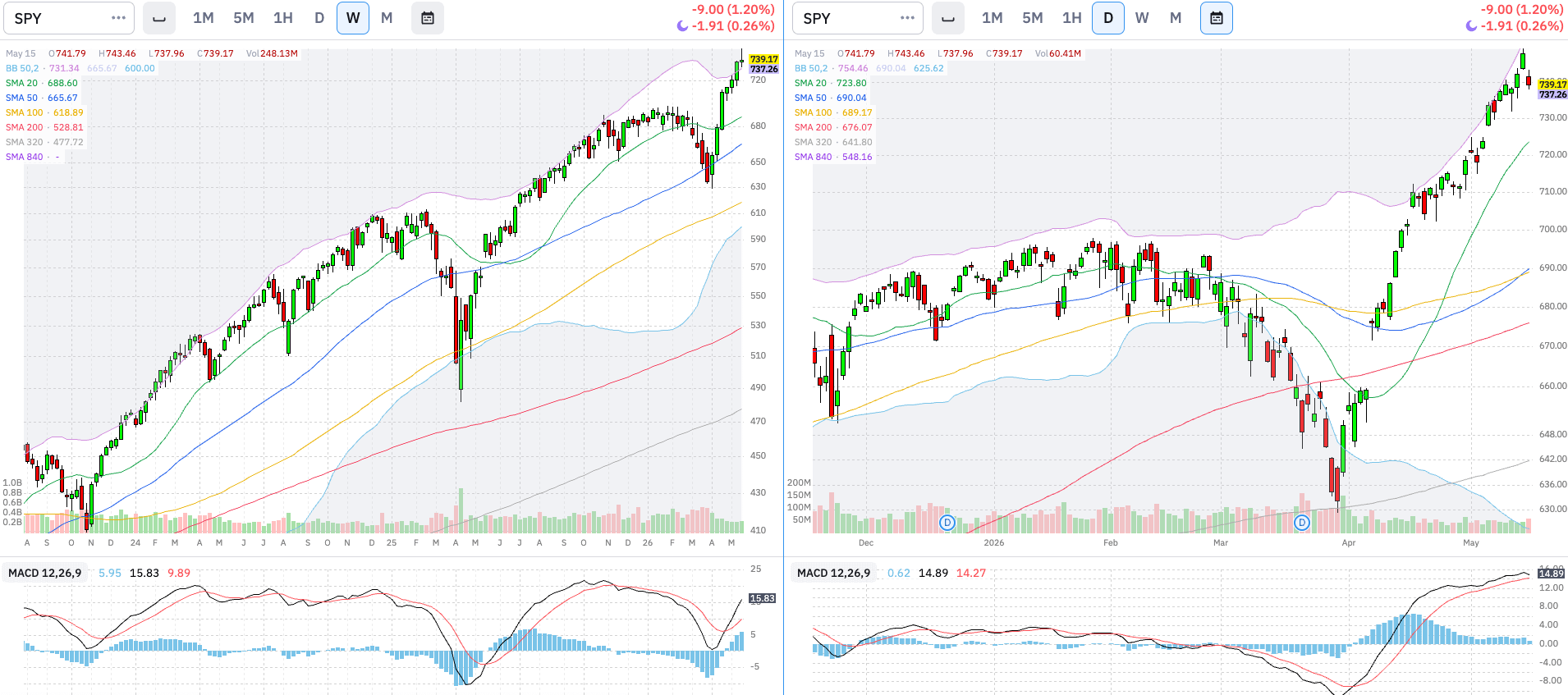
I think that we are in Rule #04.
Level 1: Why is it happening?
Economic Data: Production: ISM PMI vs. SPX
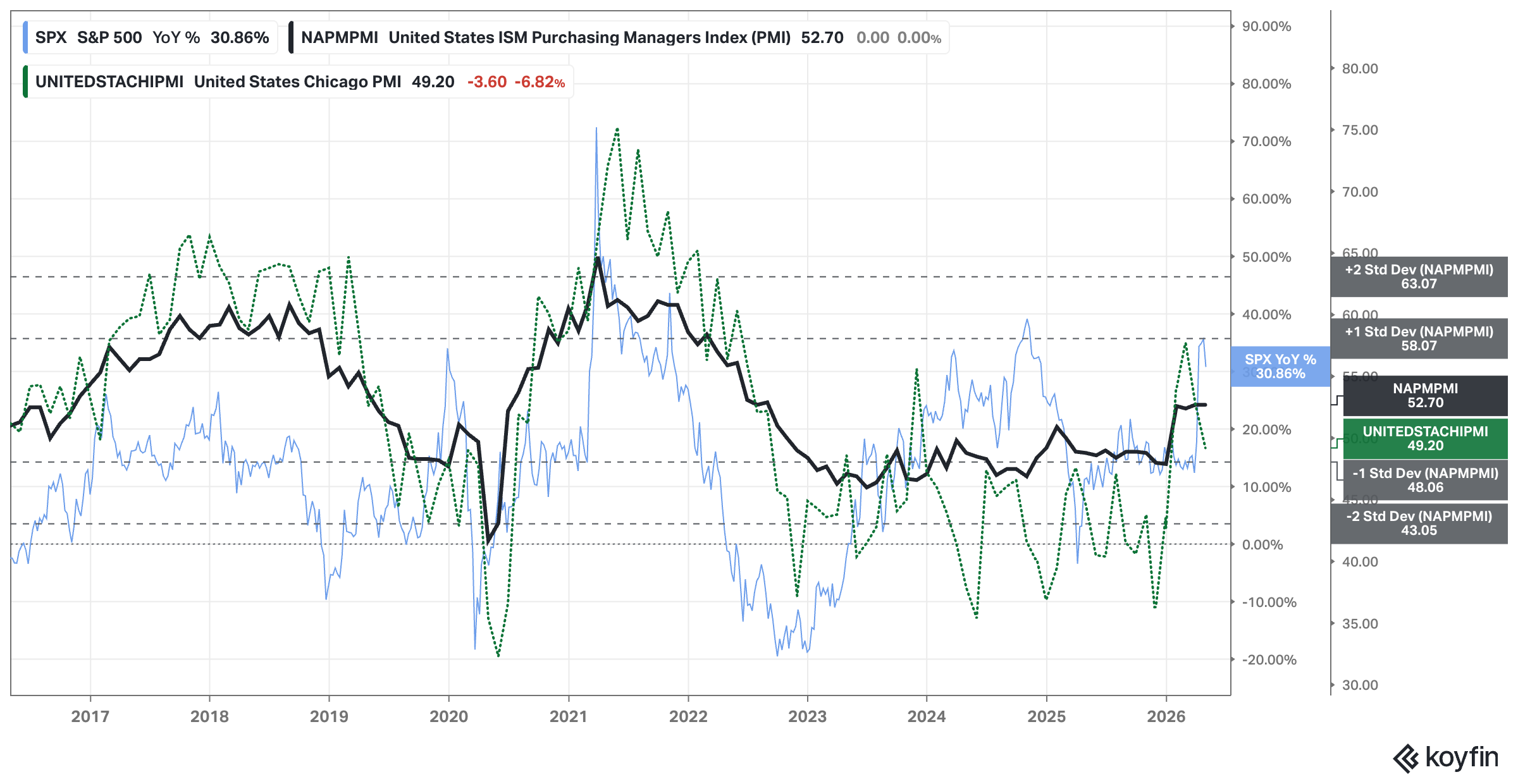
Analysis: No changes since last week.
Outlook: Bullish
Economic Data: Production: Dallas & Philadelphia Manufacturing vs. SPX
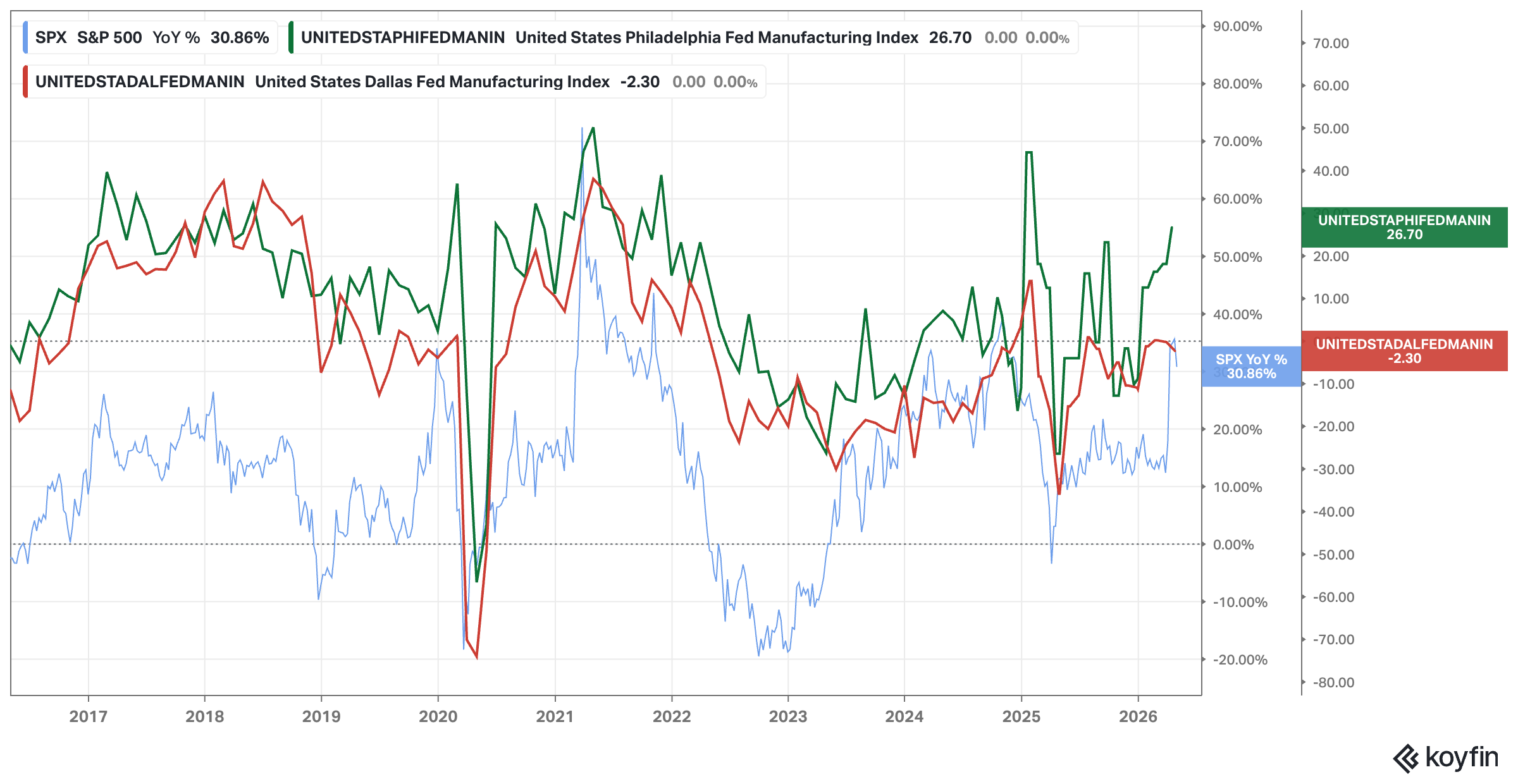
Analysis:No changes since last week.
Outlook: Bullish
Economic Data: Consumption: Consumer Sentiment
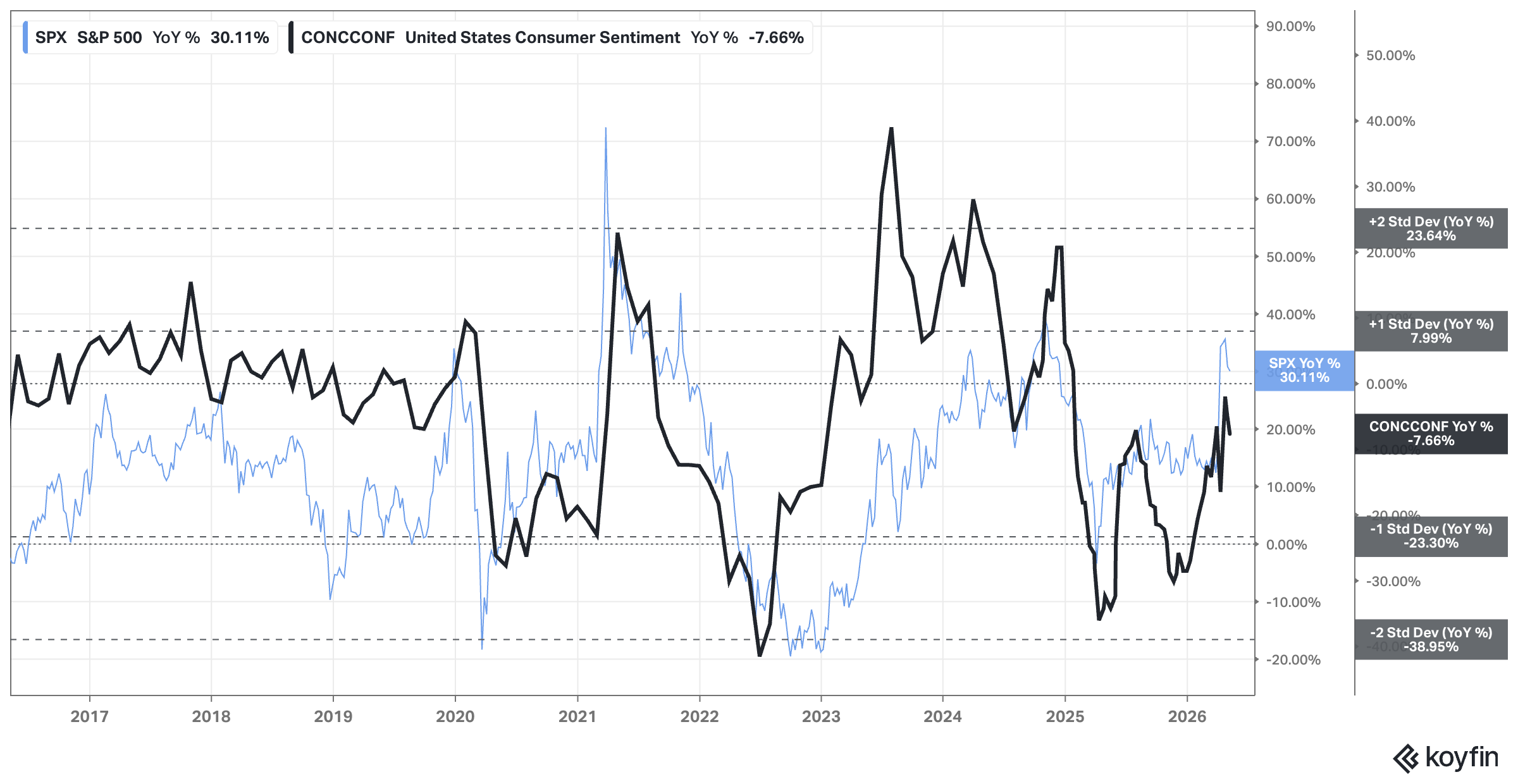
Analysis: No changes since last week.
Outlook: Neutral-Bullish
USD & Interest Rates: FED, 2yr, 10yr, and 30yr Rates
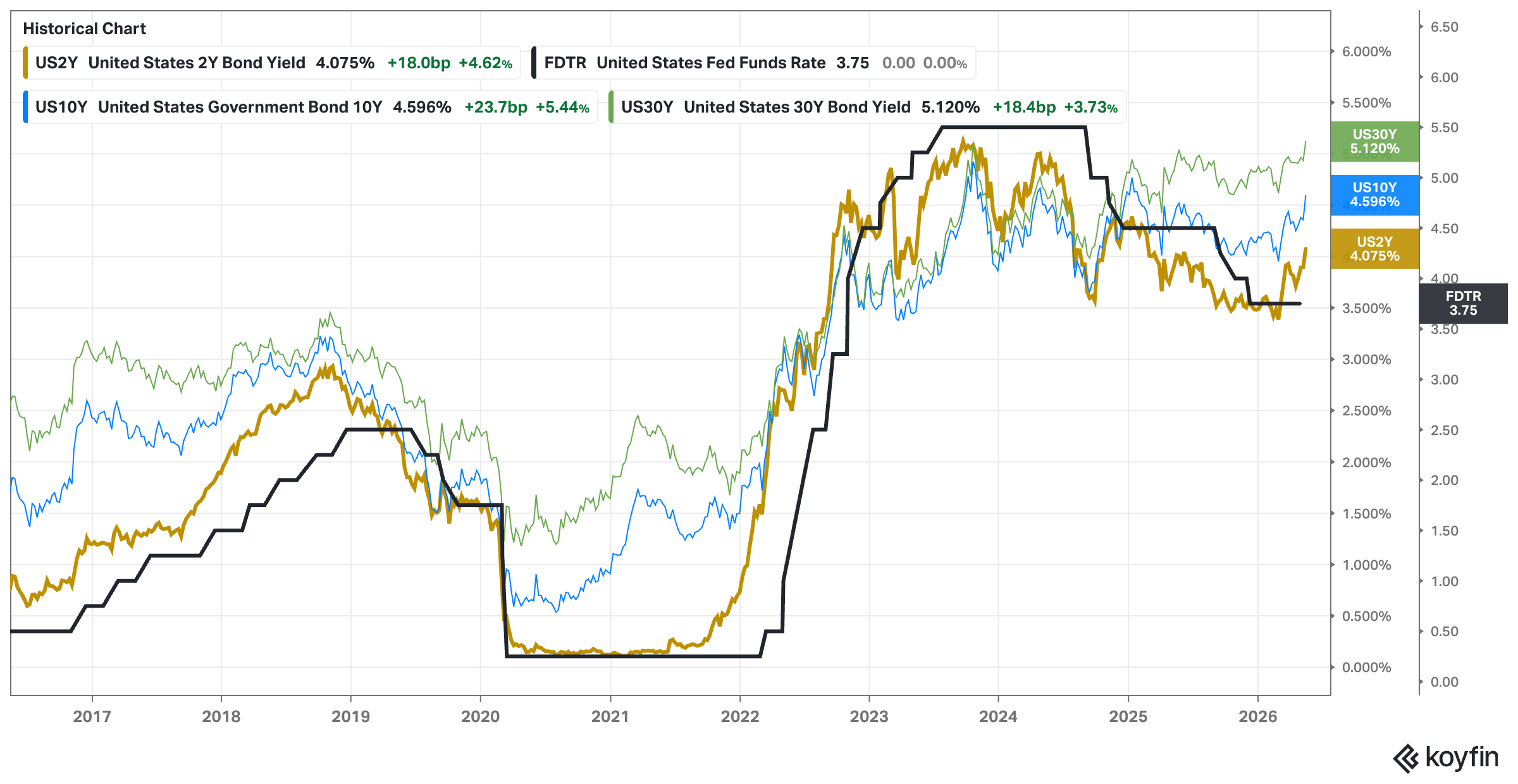
Analysis: No much change since last week. This is really not good. Interests keep increasing. Long-term (30 year) have a psychological resistance at 5% and we are at 5.120%. Markets may embrace this narrative and drag down everything.
Devils Advocate View: As market returns are accelerating rapidly, driven by raising earnings, if the government wants to sell bonds, they need to raise the returns to make them attractive. So, high yields are a result of a strong market.
Outlook: Bearish (?)
USD & Interest Rates: USD vs EEM ILF and S&P500
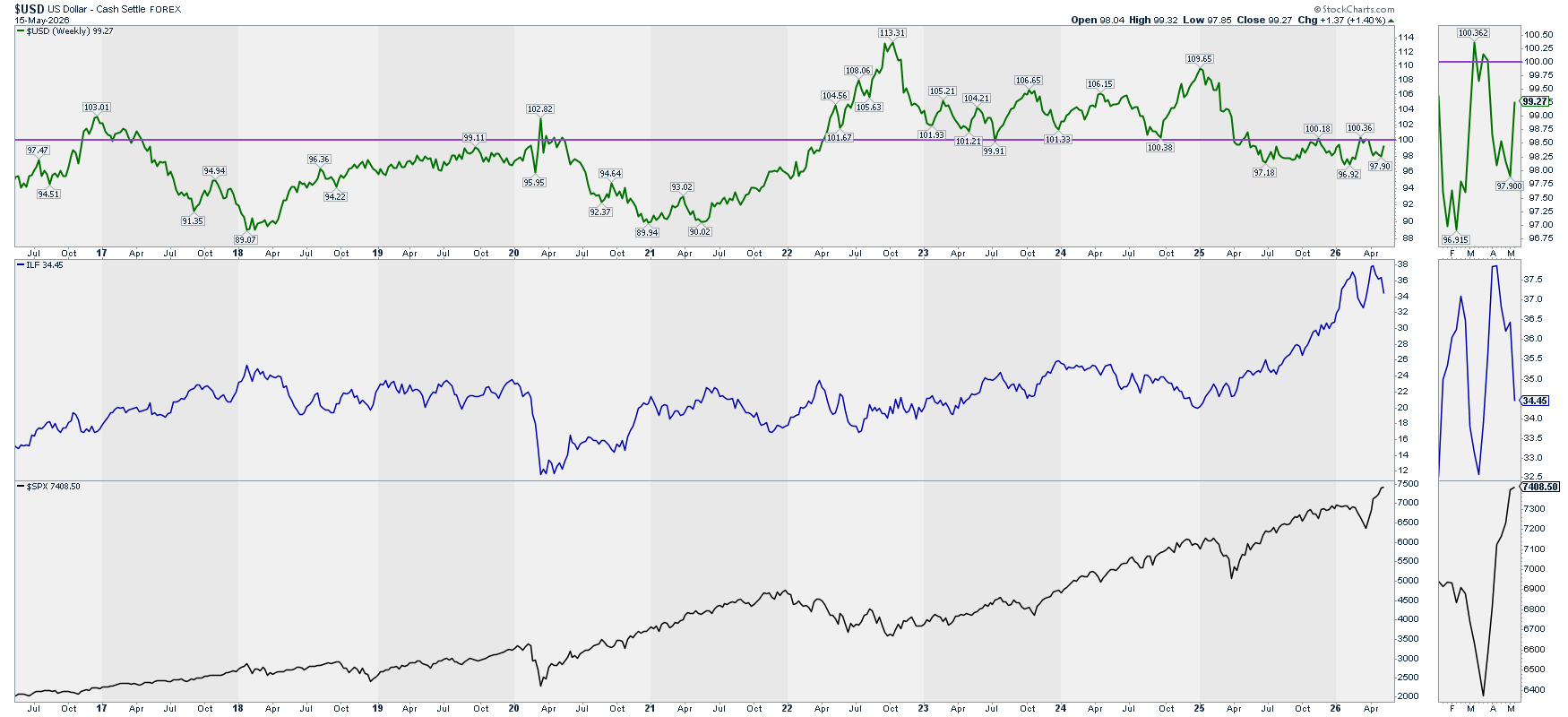
Analysis: USD up = ILF down. A long war is not a great outlook for ILF.
Outlook: Neutral (the longer the war the higher the oil & gas disruption)
Context Investors Sentiment: Credit Spreads
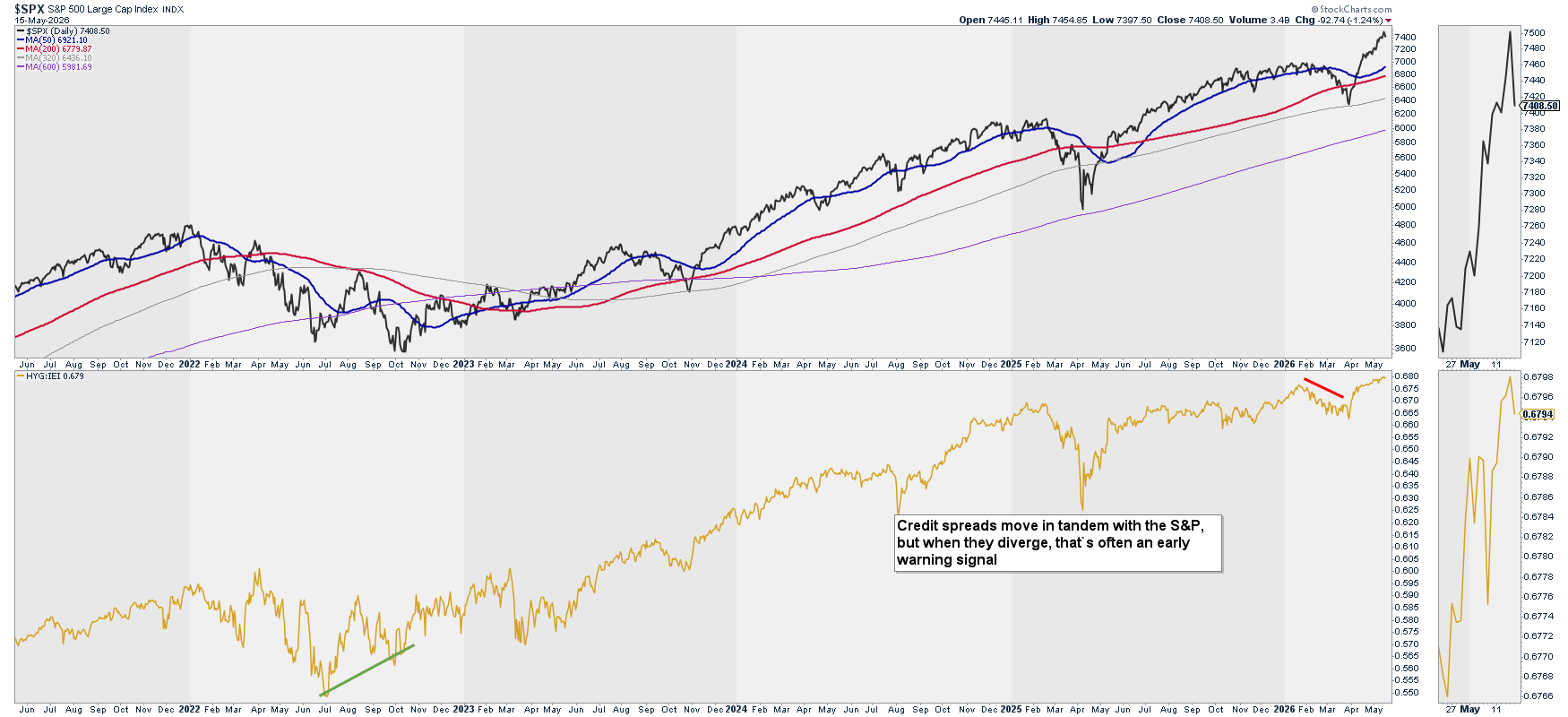
Credit spreads move in tandem with the S&P, but when they diverge, that’s often an early warning signal.
Analysis: Spreads moved in parallel with the market this past week. As spreads keep trending higher I keep my bullish outlook.
Outlook: Bullish
Level 1: Why is it happening? Summary
Economic Data (long-term): Bullish (with a neutral note on that consumer confidence)
USD & Interest Rates: Bearish (due to Interest Rates)
Investors Sentiment: Bullish
What is happening? – Level 2
Price Action: SPX – Long Trend – 20 & 10 years
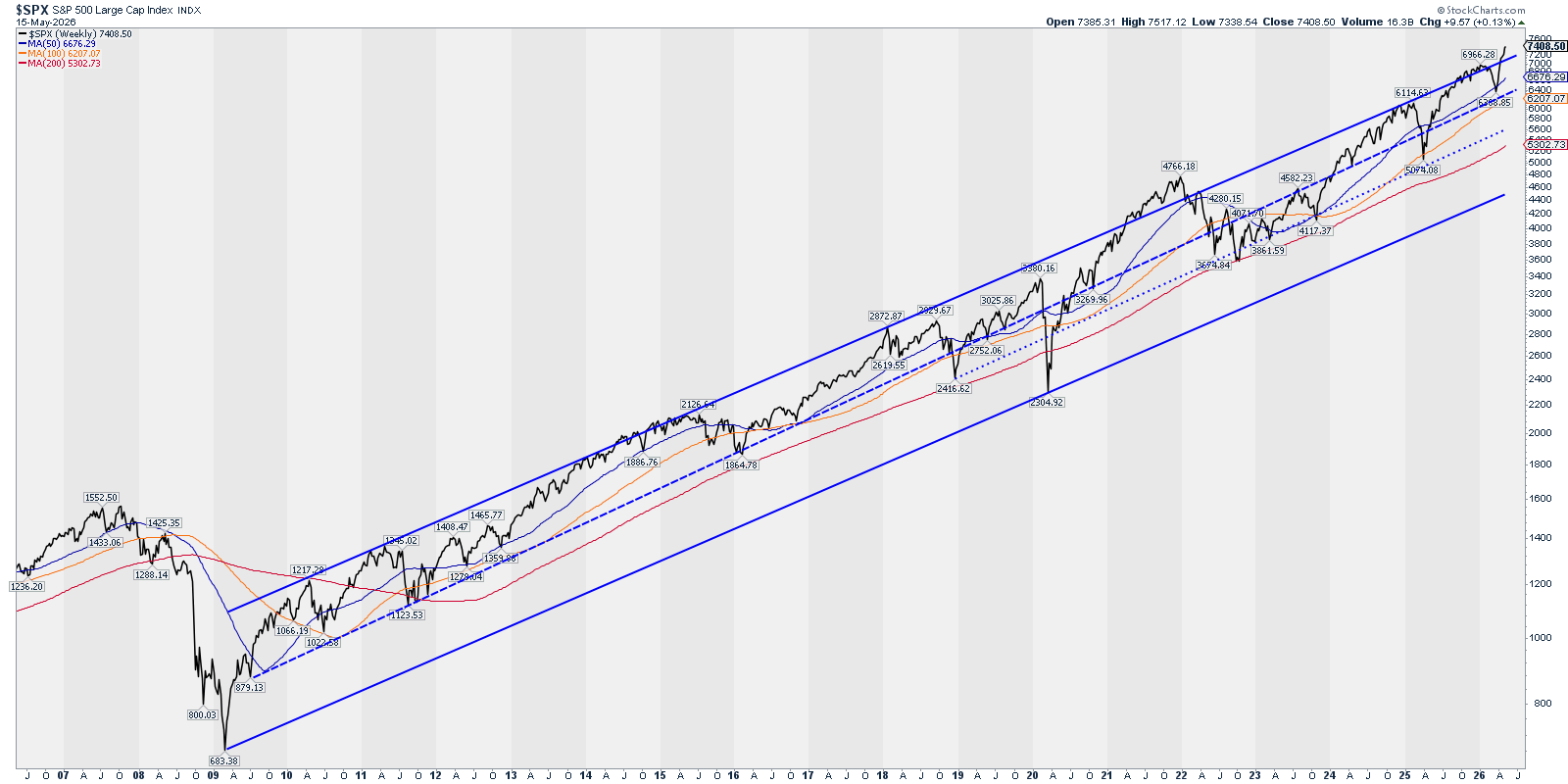
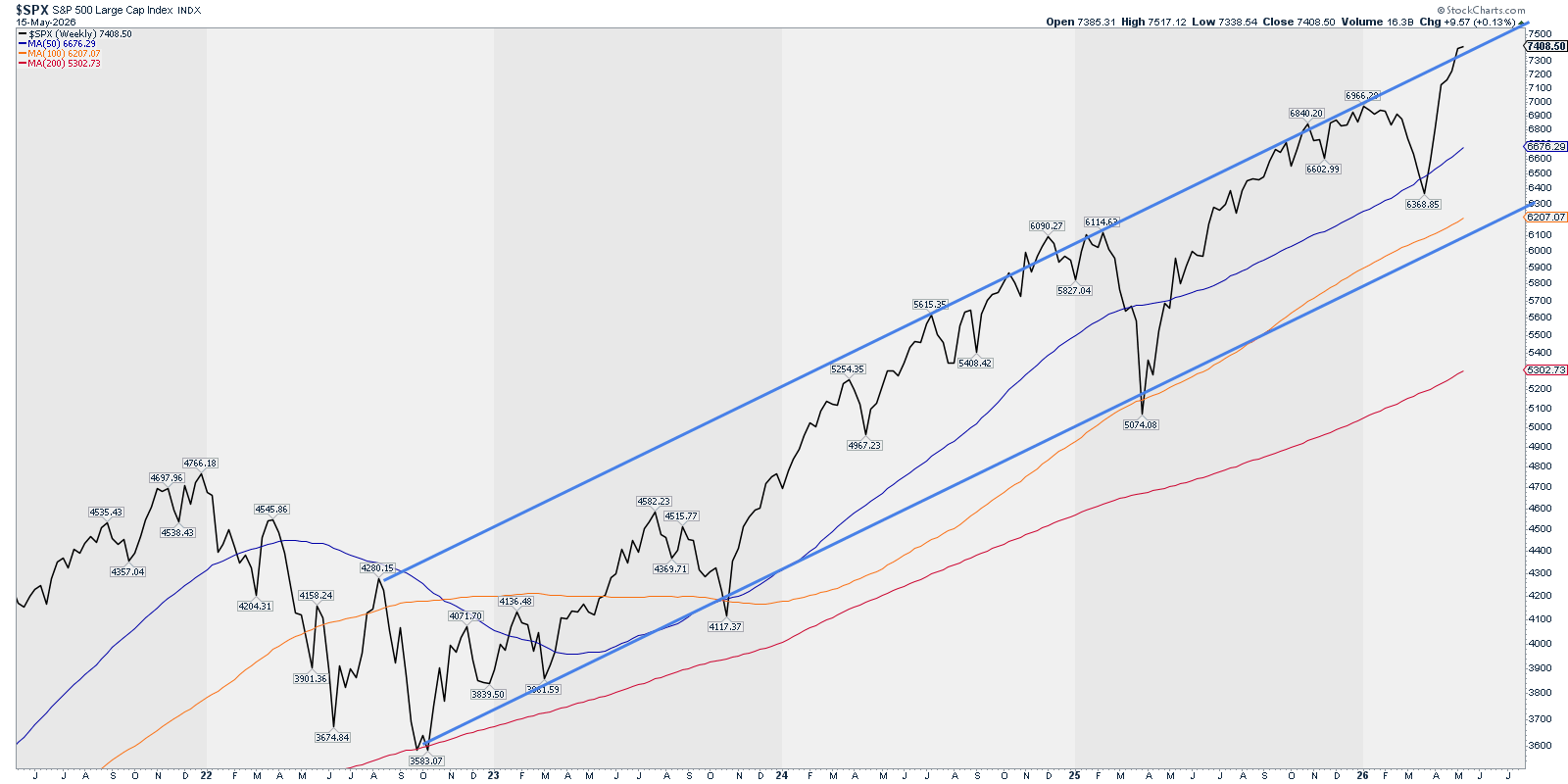
Analysis: Both channels broken on the upper side. Despite the action being bullish, this shall be considered late in the cycle and our outlook shall be bearish. We shall be selling positions here, not entering new ones.
Outlook: Bearish
Price Action: RSP – Trend – Weekly & Daily
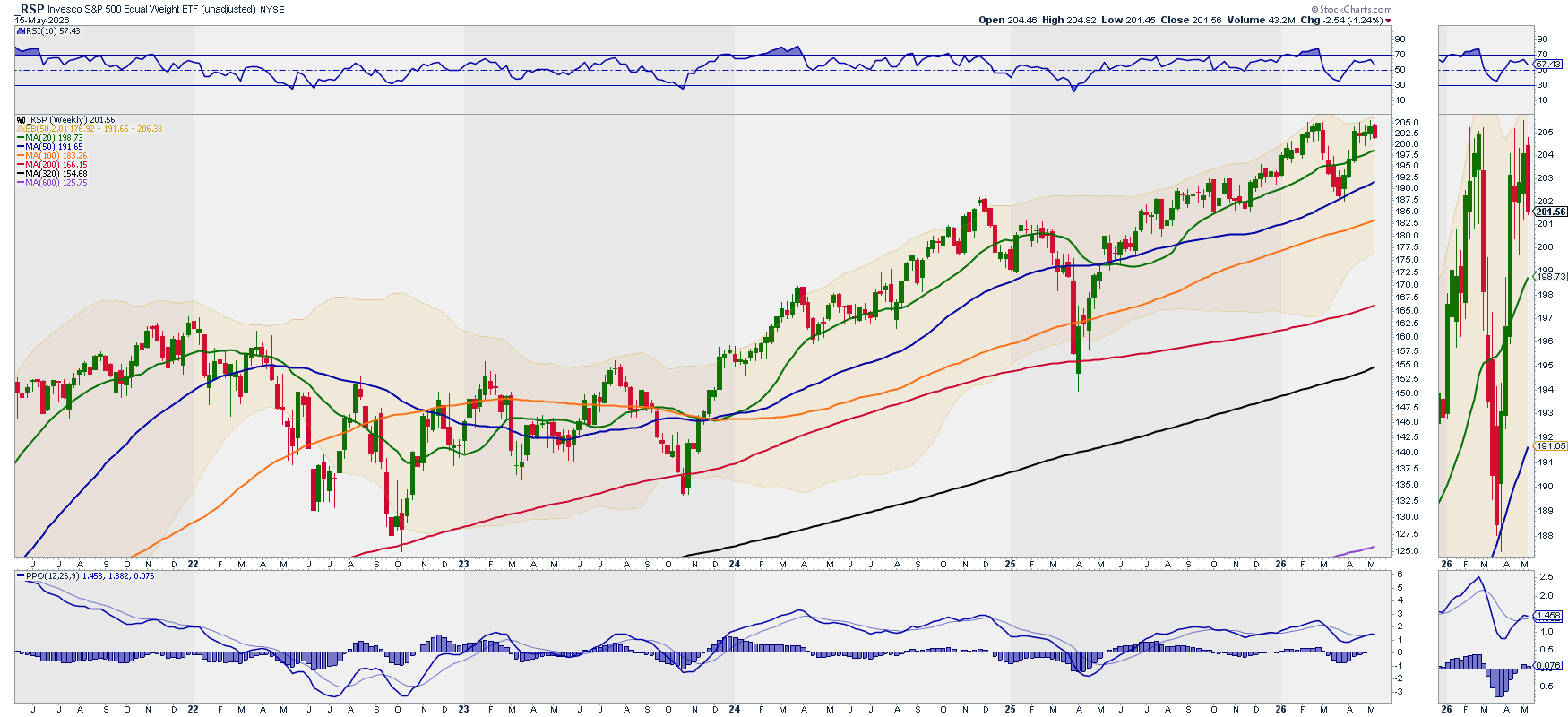
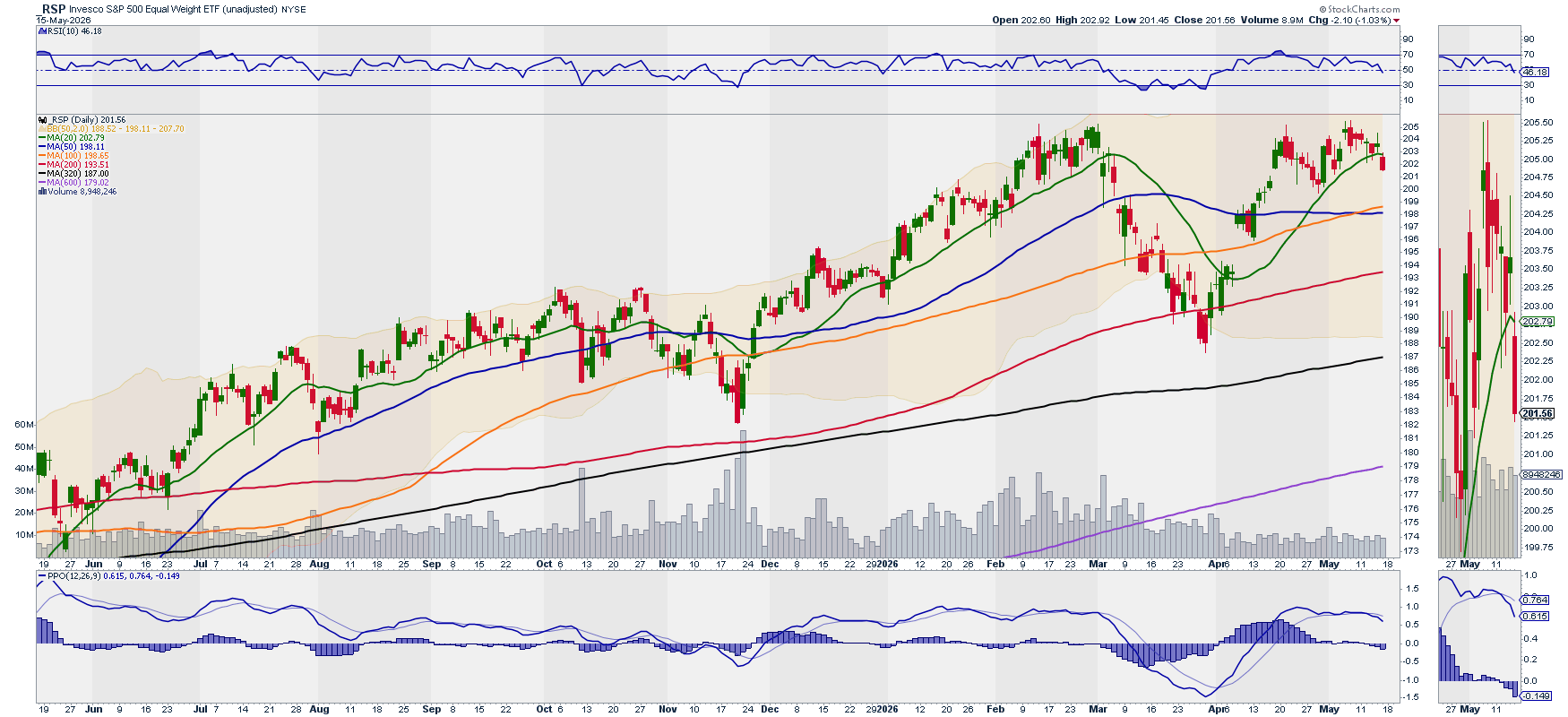
Analysis: Price crossed below the 20D SMA and both RSI and MACD confirm the down turn.
Outlook: Bearish
Breadth & Volatility: % Stocks above SMAs vs. RSP
Above 200 Daily SMA
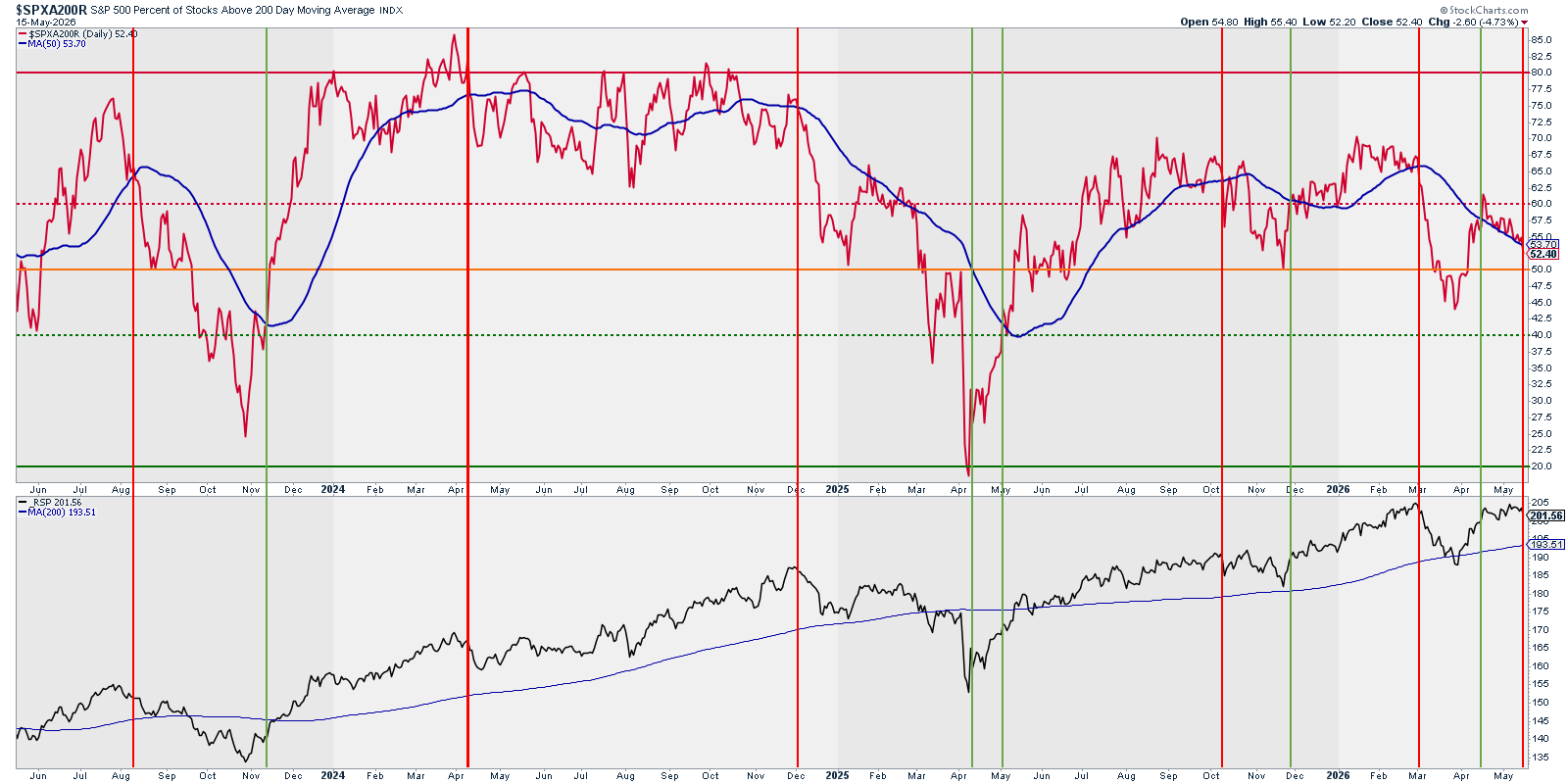
Above 20, 50, and 200 Daily SMAs
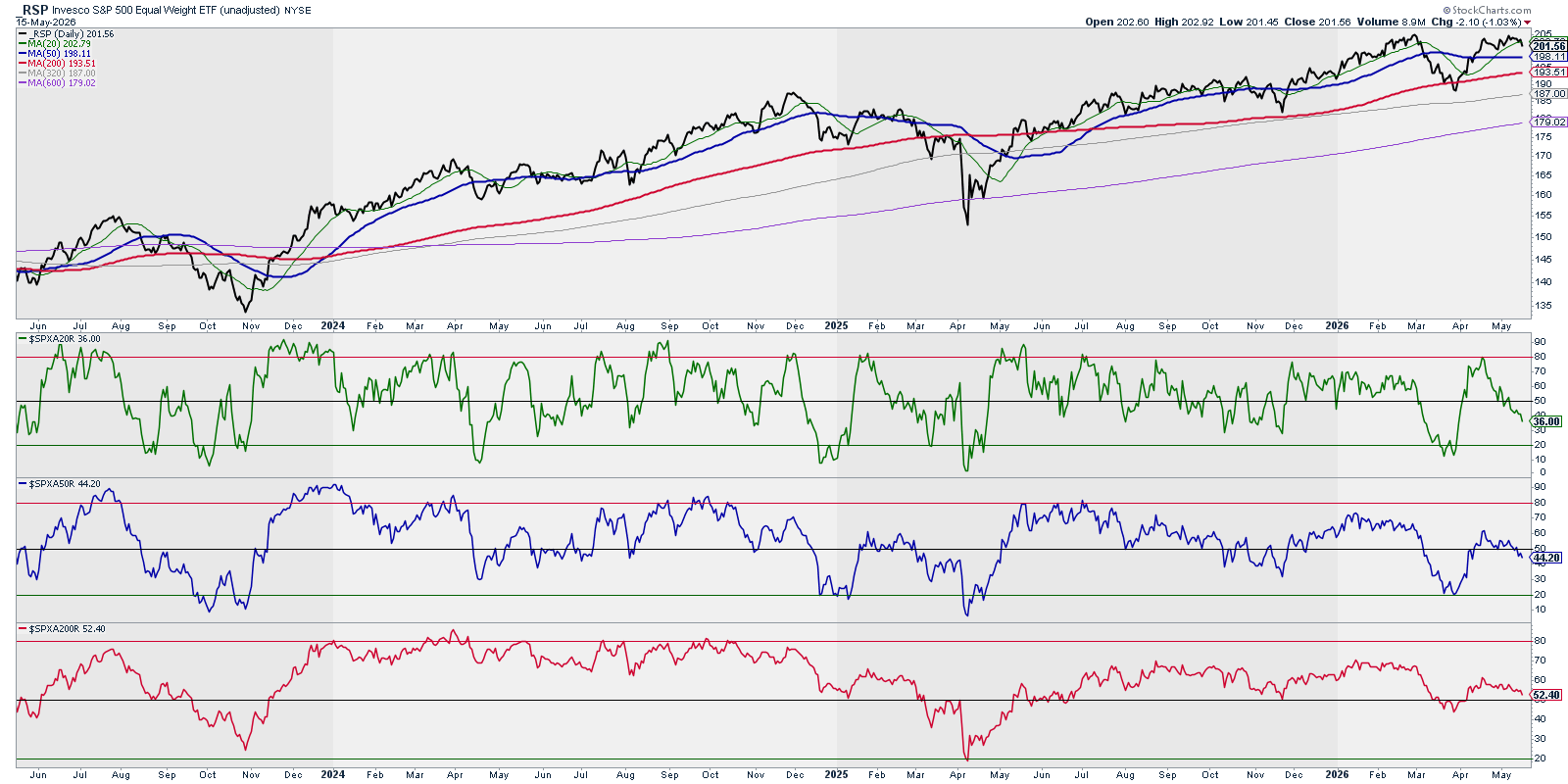
Analysis: Above 200D did trigger the bearish signal. The above 20D (green) and 50D (blue) have crossed below their 50 level.
Outlook: Bearish
Breadth & Volatility: Bullish Pct. Index & McClellan Summation Index
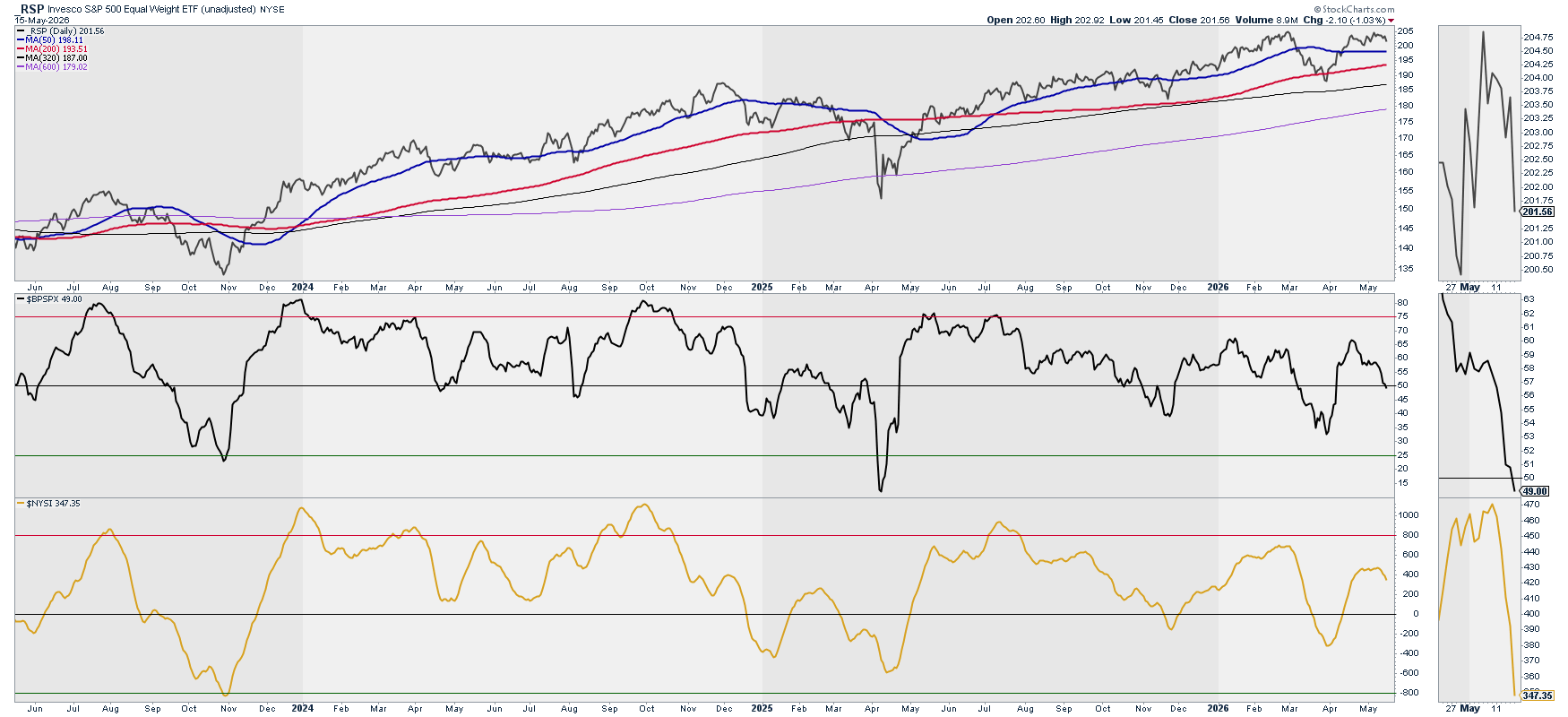
Analysis: Bullish Pct. Index has crossed below the 50 level. I’m updating the outlook from neutral to bearish.
Outlook: Bearish
Breadth & Volatility: Ratio Low Volatility Stocks / SPY vs. SPY and RSP
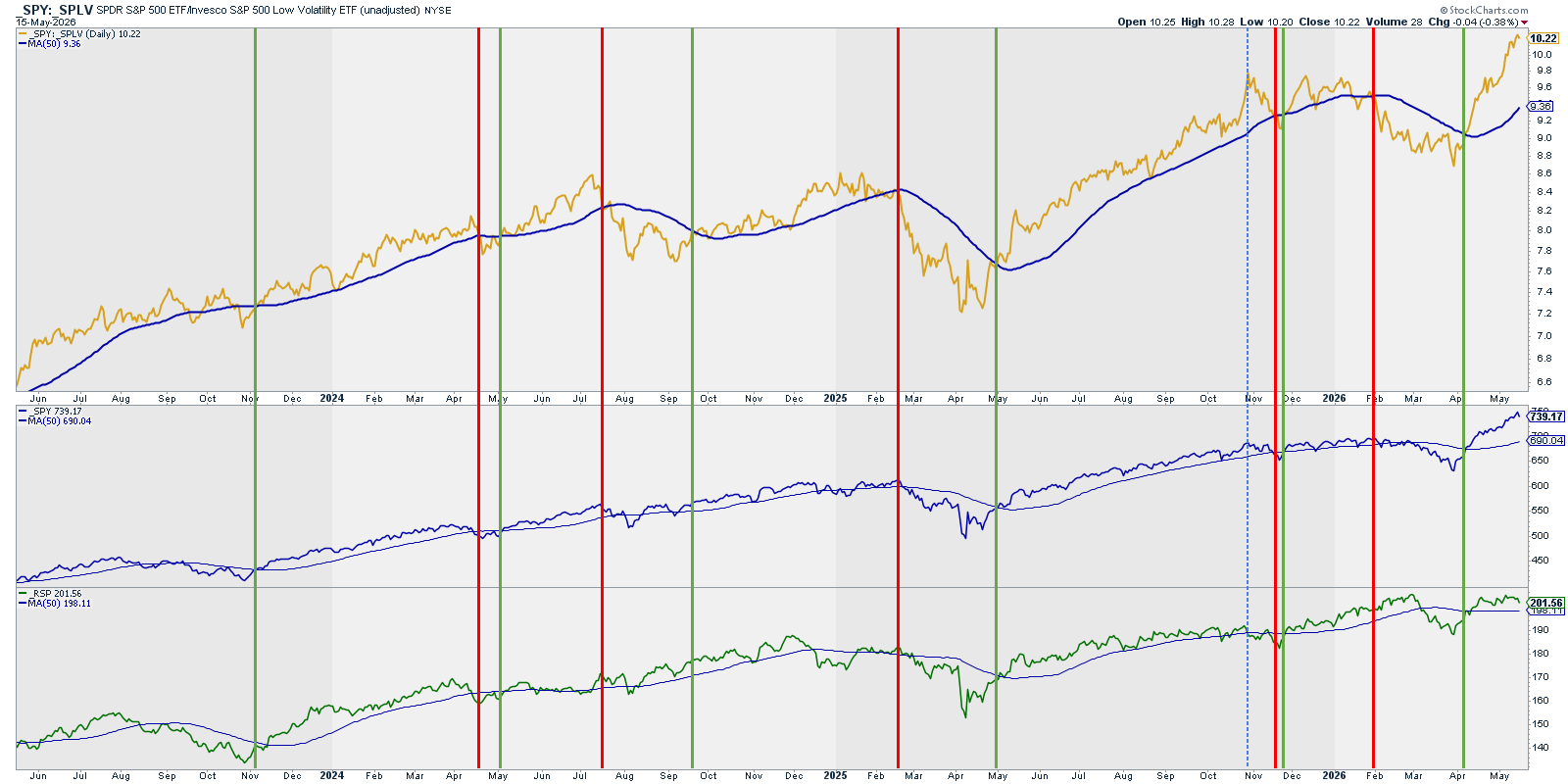
Analysis: Volatility ratio impacts more SPY than RSP. We can see the price divergence between SPY (blue) and RSP (green). It is still not clear who will push or pull the other.
Outlook: Neutral
Breadth & Volatility: New Highs vs. SPY & RSP
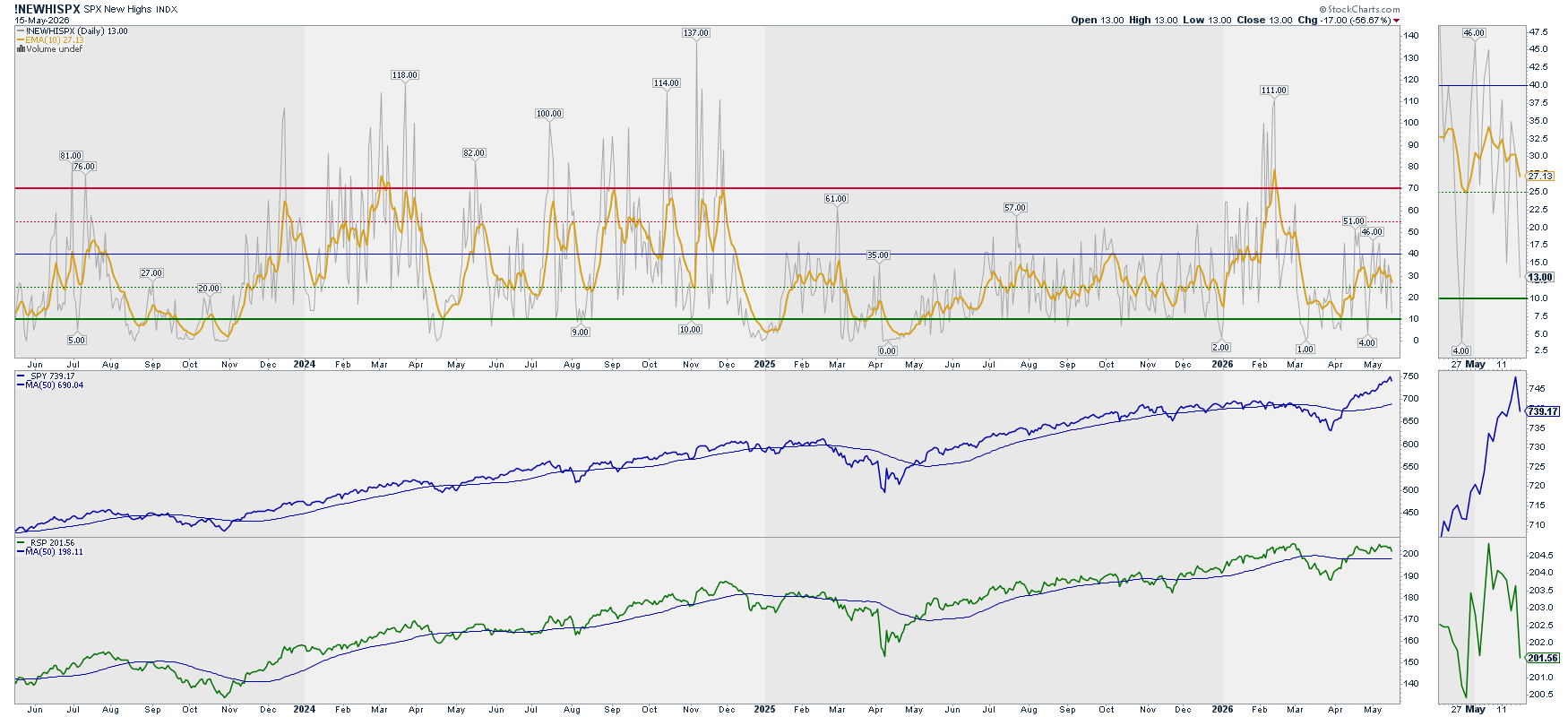
Analysis: Very low New Highs (grey line behind the yellow) with a downward trend (yellow). I’m updating the outlook from bullish to neutral.
Outlook: Neutral
Breadth & Volatility: VIX vs. SPY & RSP
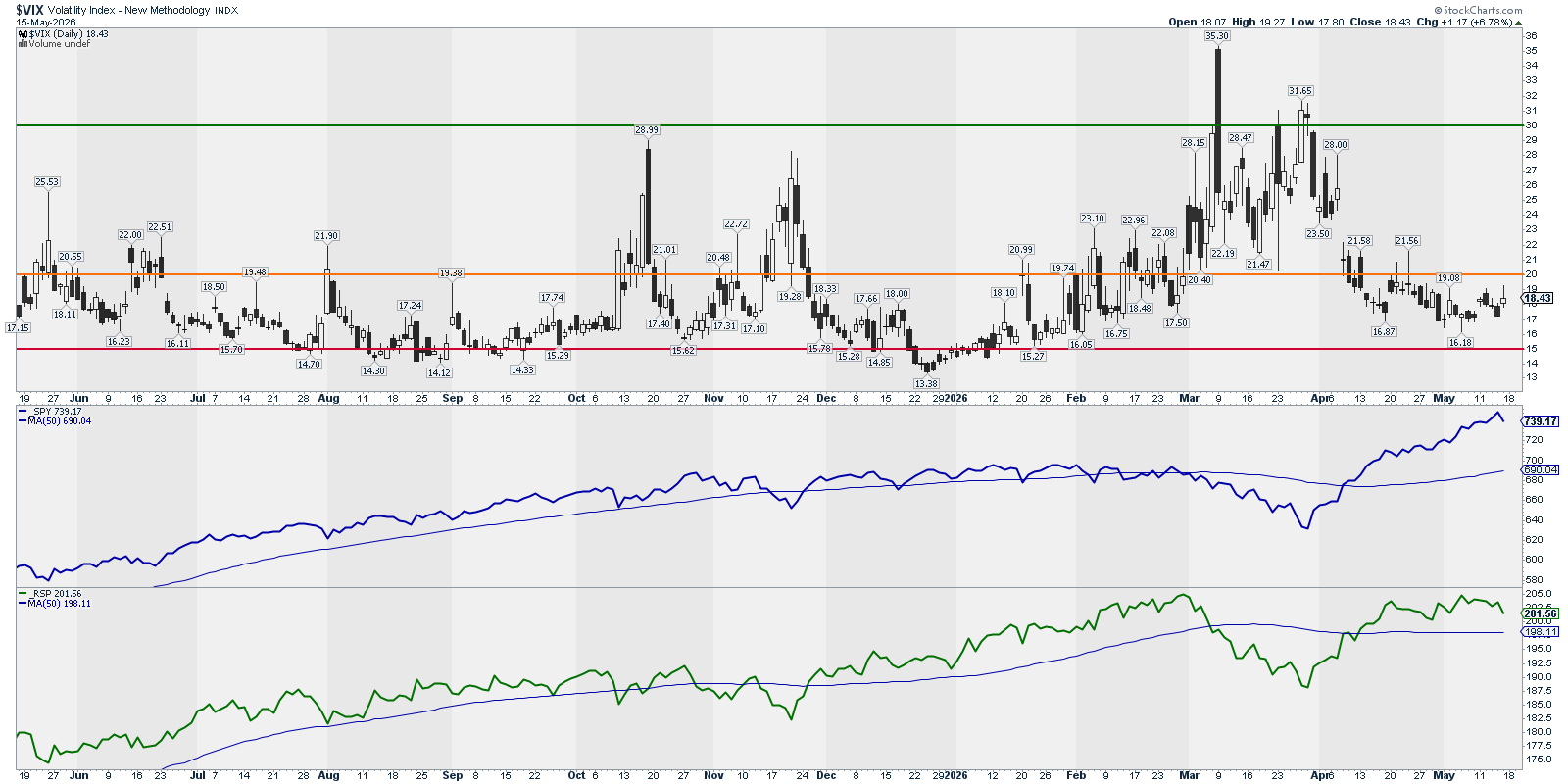
This chart is mainly to detect market bottoms.
Analysis: Sideways trend as this past week has seen more volatility. This changed the previous downward trend. I’m downgrading the trend to Neutral
Outlook: Neutral
Options: (Inverted) Put/Call Ratio vs. SPY
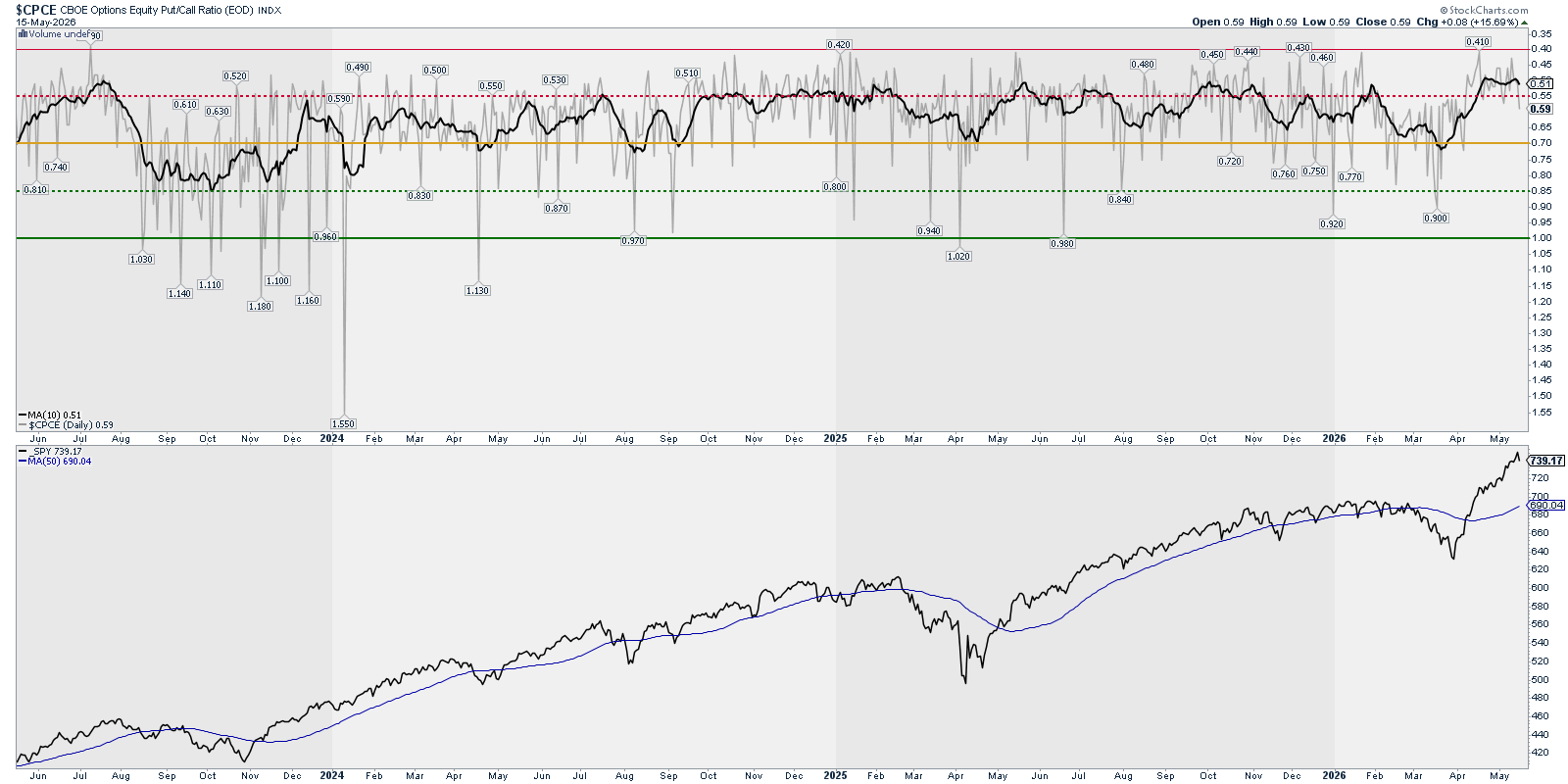
Analysis: Historically, at this levels in the P/C ratio, the market finds difficulties to advance. A downward slope in the P/C ratio 10D SMA historically means that the market (SPY) will go down. I’m keeping the outlook as Bearish.
Outlook: Bearish
Options: Gamma Exposure – SPX
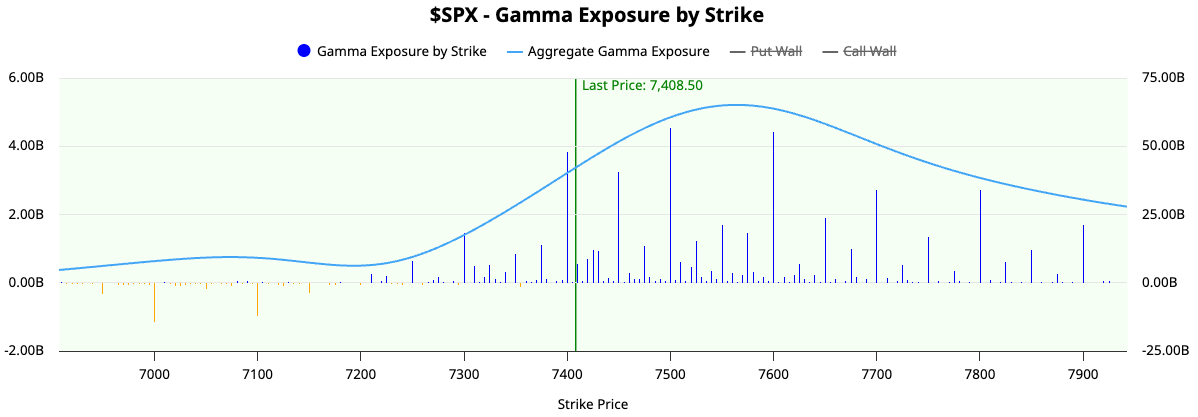
Analysis: Positive Gamma keeps increasing to higher levels at 7,500, 7,600, 7,700 and 7,800. We don’t see much support in lower levels. In case of a sudden drop in the markets, prices will fall sharply. I’m keeping the bullish outlook as we still are in a positive gamma environment.
Outlook: Bullish
Level 2: What is happening? Summary
Price Action: Bearish
Breadth & Volatility: Bearish
Options: Neutral (one Bearish and one Bullish reading)
Where is it happening? – Level 3
Bulls vs. Bears: RSP vs. RSPD (Cons. Disc. – Bulls) and RSPS (Cons. Sta. – Bears)
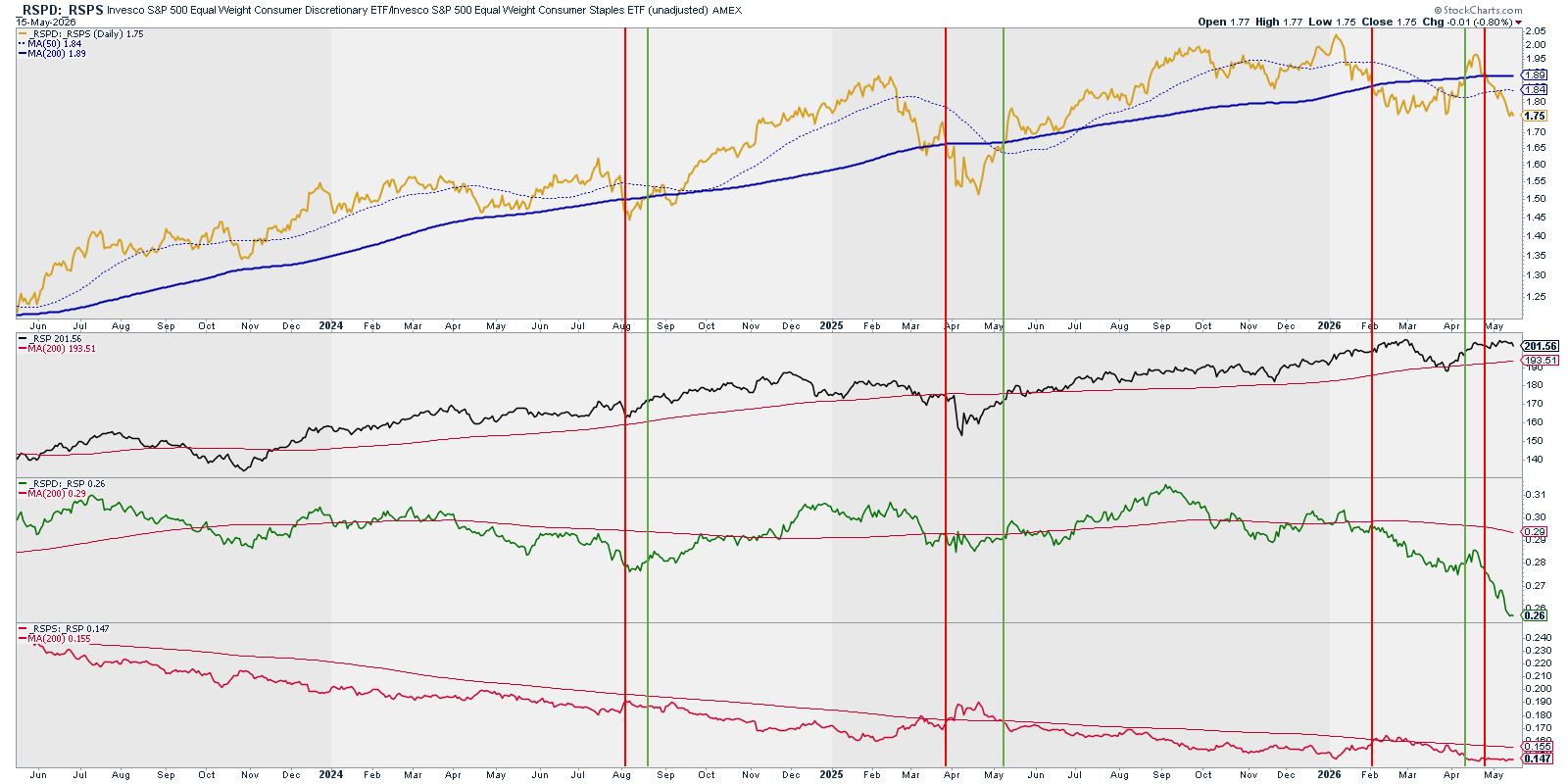
Analysis: Bearish signal (yellow) triggered and Bulls (green) are very weak and not getting stronger.
Outlook: Bearish
Sectors Rotation
Market & Economy Rotation
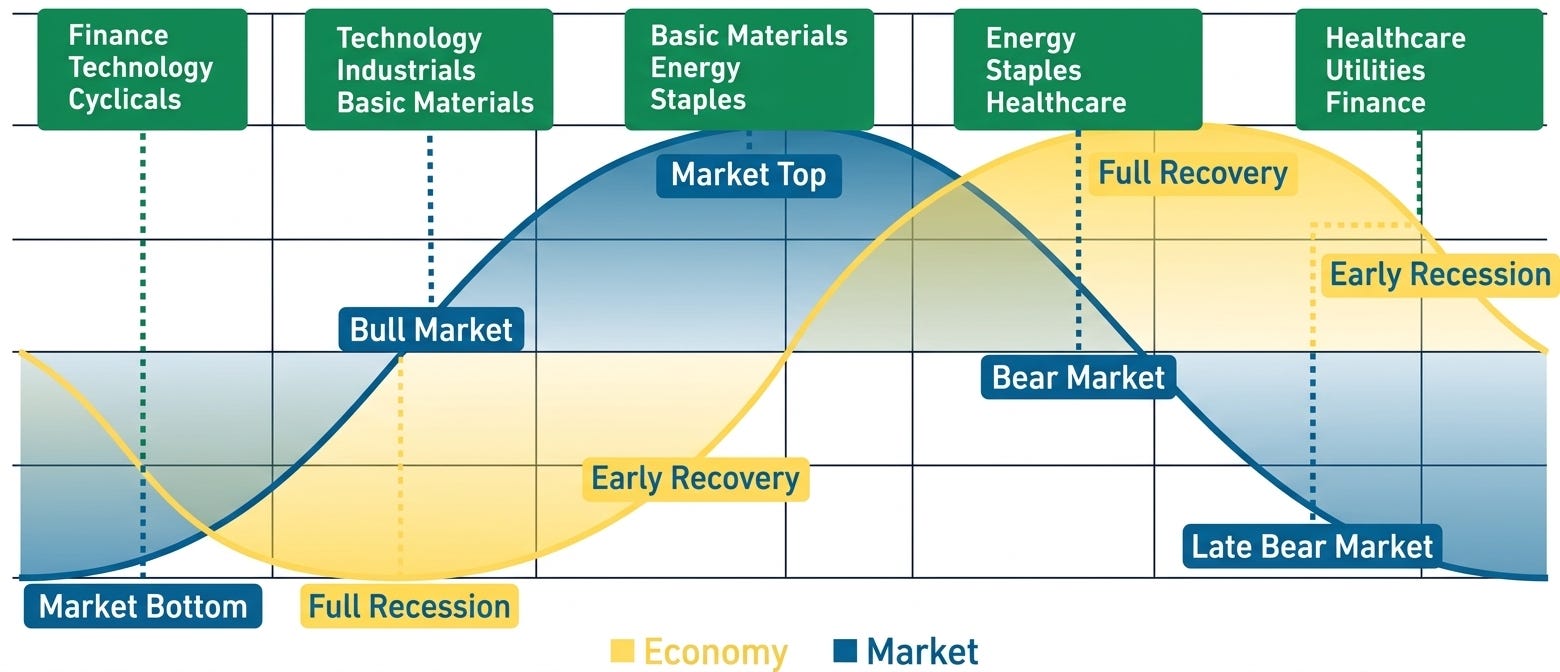
US Sectors order by ISM PMI Correlation (between parenthesis)
Growth Sectors - shall outperform when the market is bullish:
XLK: Technology (71%)
XLY: Cons. Discretionary (67%)
XLI: Industrials (66%)
XLB: Basic Materials (66%)
XLF: Financials (59%)
Value Sectors - shall outperform when the market is bearish:
XLV: Healthcare (55%)
XLC: Communications (49%)
XLE: Energy (44%)
XLU: Utilities (35%)
XLP: Cons. Staples (30%)
XLRE: Real Estate (16%)
Analysis:
With a market moving at this speed is difficult to decide in which moment of the cycle we are. We know that the economy is improving from lower levels, so we could consider it “Early Recovery”. The market, after the noise brought by the Iran war, is signalling towards a Bull Market as we shall see Technology and Industrials leading.
Sectors Performance
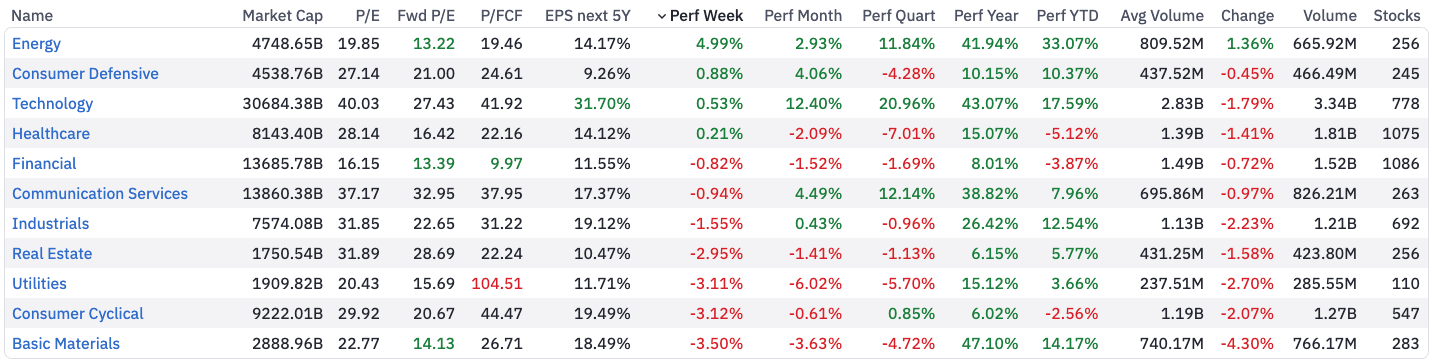
Analysis: Due to the stale situation with the Iran war, Energy led this week’s performance. The last quarter’s performance shows the tale of two markets. Energy and Technology (and Communications) leading and the rest of the market in a pretty bad situation in some sectors.
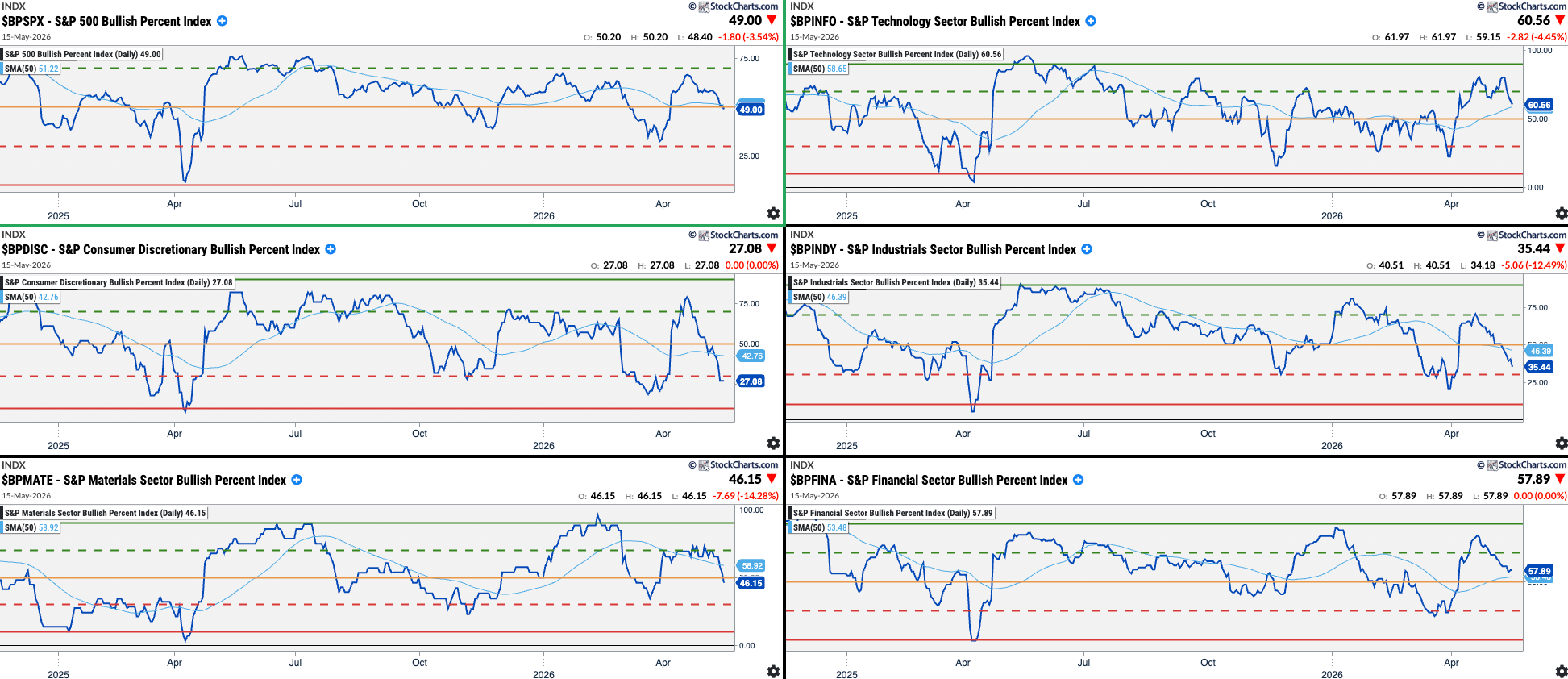
Sectors Bullish Percent Index
Growth Sectors:
Value Sectors:
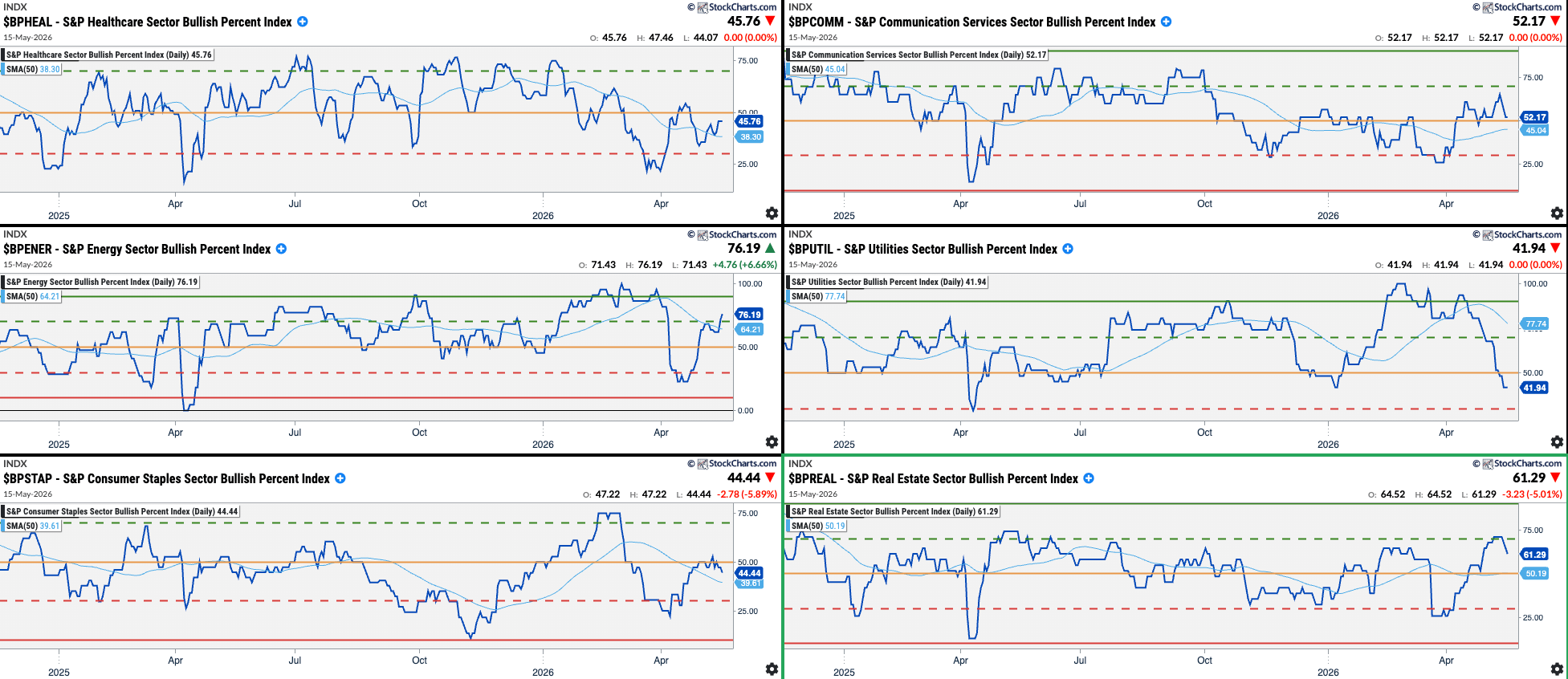
Any sectors below their red levels are good opportunities to find great companies at good valuations or buy sector ETFs (buy cheap). Those sectors above their Green levels are candidates to be sold (sell expensive).
Buy Opportunities: Utilities, Consumer Discretionary
Sell Opportunities: Real Estate
Level 3: Where is it happening? Summary
Bulls vs. Bears: Bearish
Market & Economy Rotation: Bull Market
All Levels Summary and Final Thoughts
Level 1 Summary - The Why
Economic Data (long-term): Bullish (with a neutral note on that consumer confidence)
USD & Interest Rates: Bearish (due to Interest Rates)
Investors Sentiment: Bullish
Level 2 Summary - The What
Price Action: Bearish
Breadth & Volatility: Bearish
Options: Neutral (one Bearish and one Bullish reading)
Level 3 Summary - The Where
Bulls vs. Bears: Bearish
Market & Economy Rotation: Bull Market
Level 4: Scanning for opportunities
Stock Screener
Descriptive
Index: S&P500 | Market Cap.: +Mid (+$2B) | Option/Short: Yes/Yes
Avg. Volume: >1M | Relative Vol.: Over 1 | Price: >$20
Fundamental
EPS Growth Next Year: >15%
Technical
Performance: Quarter Up | Price > 50D SMA | Price > 200D SMA | Beta > 1 | ATR > 1
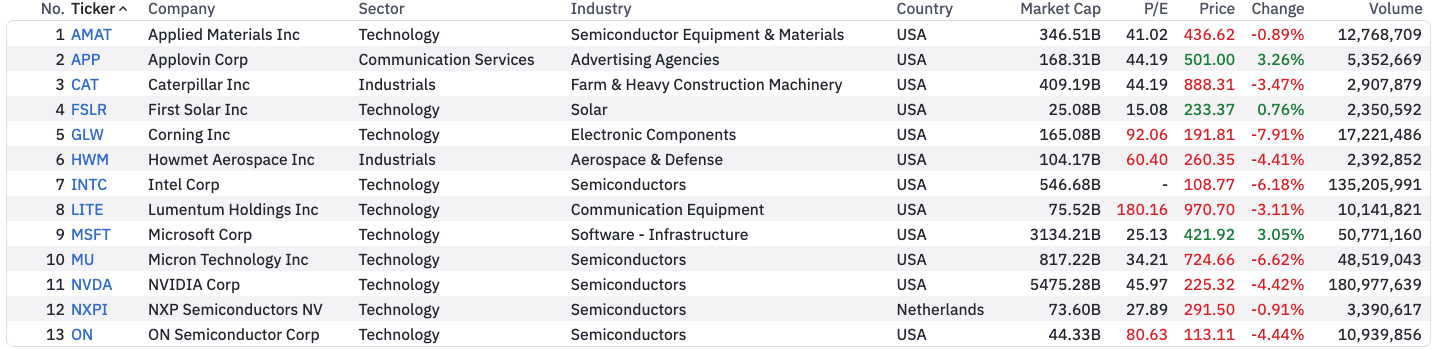
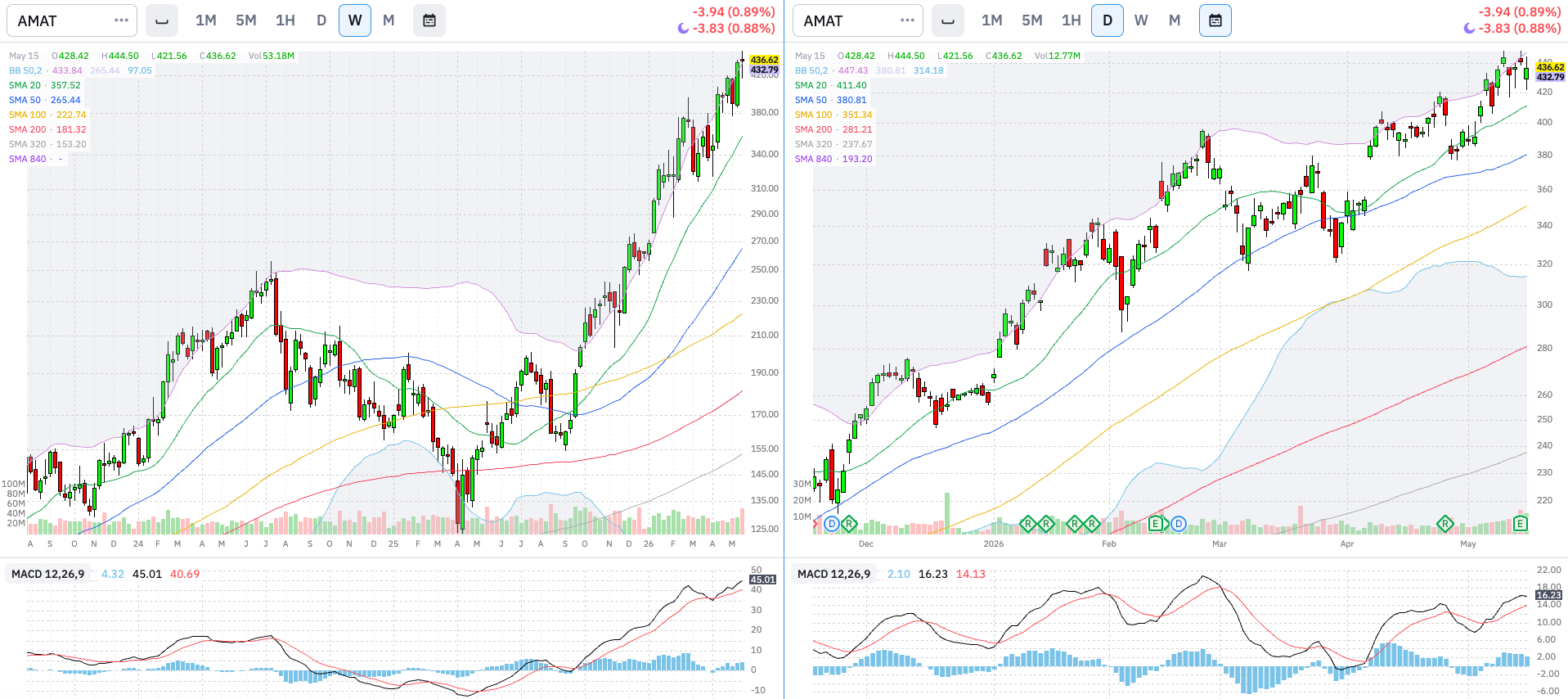
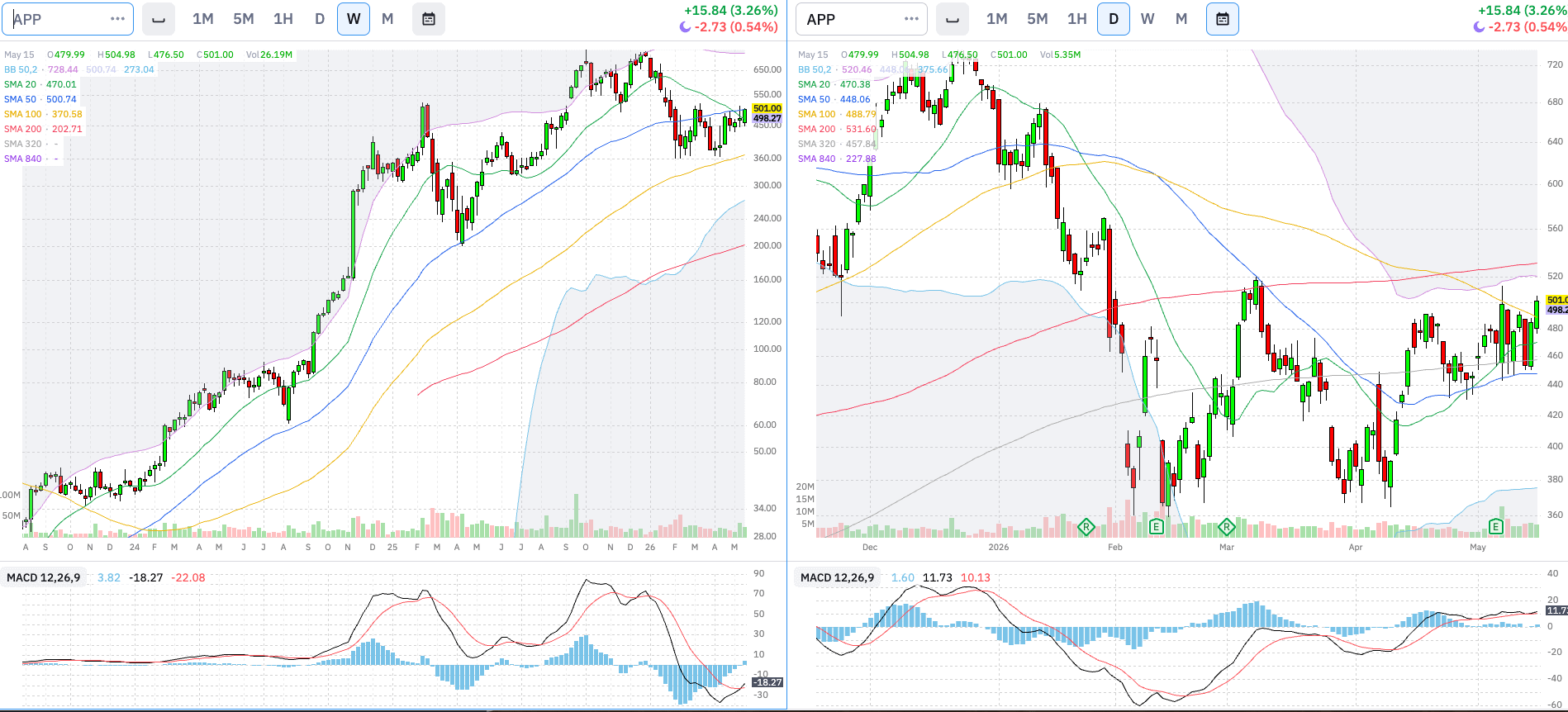
I like: AMAT and APP:

Disclaimer: The content on AMAT Investing is strictly for educational and learning purposes. The author is not a licensed financial advisor and holds no formal financial education. This post does not constitute professional financial advice. All investing involves risk of loss. Always conduct your own research and consult a licensed professional before making any investment decisions.